

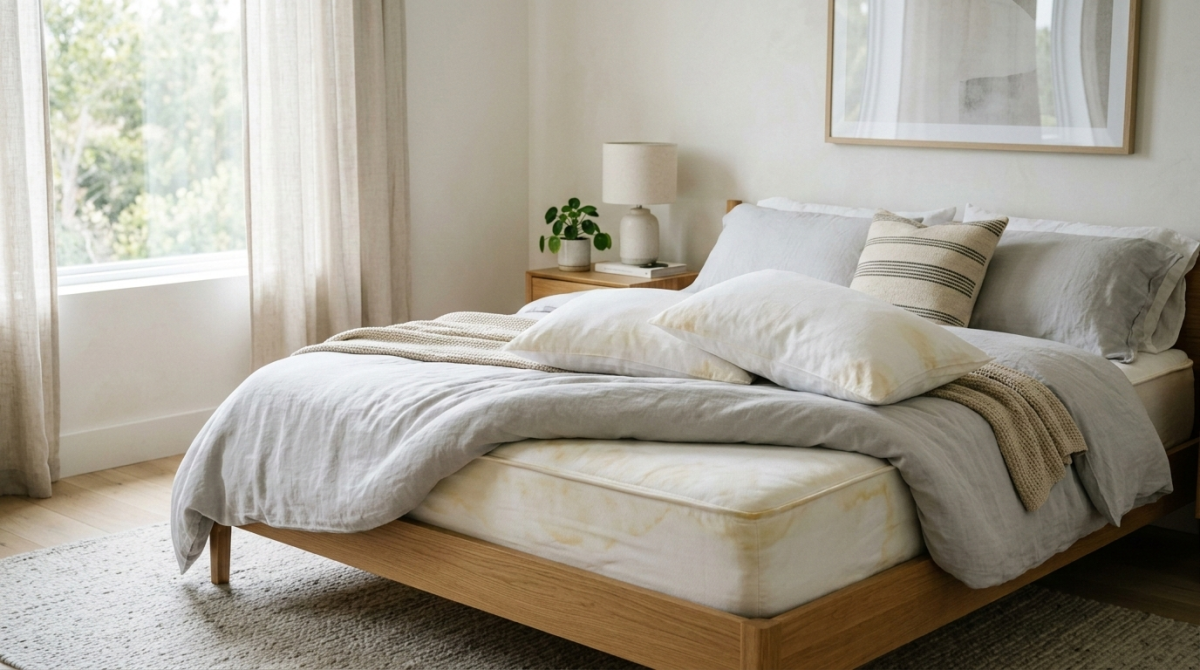
Nobody wants to talk about it, but every mattress tells a story. Yours is probably yellow in a few places, and if you’ve had it long enough, those patches have graduated from pale lemon to something closer to old newspaper. The pillows are likely no better. This is not a reflection of your character. It is a reflection of basic biology, and once you understand what’s actually causing the staining, the fix becomes a lot more straightforward.
What’s actually causing the yellow?
The short answer is sweat. The longer answer involves sweat, body oils, saliva, and, if you use skincare or hair products before bed, a fair contribution from those as well. Sweat itself is mostly water, but it also contains urea, fatty acids, and proteins that oxidise over time and turn yellow when they dry into fabric. That process accelerates with heat and humidity, which is why people in warmer climates tend to notice it faster.
Pillows cop the worst of it because your face and neck produce a lot of moisture overnight, and a standard pillowcase offers less protection than people assume. Mattress staining tends to happen more slowly but goes deeper, particularly around the areas where you sleep most consistently.
None of this is unusual. It just looks worse when you strip the bed.
Before you start
Check the care label on your pillow before you do anything else. Most polyester fibrefill and memory foam pillows have specific instructions, and some memory foam products should not go anywhere near a washing machine. Down and feather pillows can generally be machine-washed, but they need a proper drying cycle to avoid mildew setting in at the core. Mattresses, obviously, cannot go in the wash at all, so those get treated in place.
Gather what you need before you start. For most yellow stain removal, you’ll be working with white vinegar, bicarbonate of soda, dish soap, hydrogen peroxide (available from the supermarket in the first aid section, usually 3% concentration), and a spray bottle. You probably already have most of this in the house.
Removing yellow stains from pillows
For machine-washable pillows, the most effective approach is to dissolve half a cup of white vinegar and half a cup of bicarbonate of soda into a hot wash cycle along with your regular detergent. The combination works because the acid in the vinegar helps break down the protein and oil residue, and the bicarb adds a deodorising and mild abrasive effect. Add the pillows two at a time if the machine has room, so they move around properly.
For stubborn staining that’s had time to set, make a paste from bicarbonate of soda, dish soap, and a small amount of hydrogen peroxide, apply it directly to the stained area, and leave it for twenty to thirty minutes before washing. The hydrogen peroxide has a gentle bleaching action that addresses the yellowing specifically without damaging most fabrics. Test a small spot first if the pillow is a colour you care about, though on white or cream bedding you’re unlikely to have any issues.
After washing, dry thoroughly. This is the step people rush and regret. Damp filling goes mouldy, and mouldy pillows are a problem that goes well beyond cosmetics. If you’re using a dryer, add a couple of clean tennis balls or dryer balls to help break up clumping in the fill. Two full cycles is not unreasonable for larger pillows.
Removing yellow stains from a mattress
You cannot saturate a mattress with liquid, so the method here is more targeted. Mix one cup of hydrogen peroxide, three tablespoons of bicarbonate of soda, and a few drops of dish soap together in a spray bottle and shake it gently. The fizzing is normal.
Spray the solution onto the stained area, working it lightly into the surface with a soft cloth or brush rather than scrubbing hard. Let it sit for at least ten minutes, or longer for older staining. Then blot the area dry with a clean towel. Do not rub, as that pushes the residue further into the fibres. Repeat if needed.
Once the area is mostly dry, sprinkle a light layer of bicarbonate of soda over it and leave it for several hours, or ideally overnight. This draws out any remaining moisture and helps with odour. Vacuum it off thoroughly before making the bed.
Open a window if you can and let the mattress air before putting the sheets back on. The combination of hydrogen peroxide and bicarb does produce a faint smell while it’s working.
Enzyme cleaners for protein-based stains
If the staining is particularly stubborn or long-established, an enzyme-based cleaner is worth trying. These products contain biological enzymes that break down protein molecules specifically, which makes them well-suited to the kind of organic residue that causes yellowing. You’ll find them in the laundry aisle at most supermarkets. Follow the product instructions, but the general approach is the same: apply, wait, blot dry.
Avoid using hot water on protein stains before you’ve treated them. Heat sets protein into fabric, which is why the stain you rinsed with hot water and put through a warm wash is now permanent. Cold or lukewarm water when pre-treating, then hot for the actual wash cycle.
How to stop it from happening again
A good mattress protector makes a significant difference. The waterproof-backed variety creates an actual barrier between your body and the mattress surface, rather than just adding another layer of fabric for sweat to pass through. It also means you’re washing the protector rather than wrestling with the mattress every few months.
Pillow protectors serve the same purpose and are considerably easier to launder than the pillows themselves. They sit between the pillow and the pillowcase and take the brunt of everything your face produces overnight. Wash them every couple of weeks along with your sheets.
If you’re dealing with recurring staining despite using protectors, it may be worth looking at your bedroom temperature. Sleeping hot accelerates the issue, and a cooler room or lighter bedding often helps more than any cleaning regimen.
The pillows themselves should be washed two or three times a year, regardless, not just when the staining becomes noticeable. Regular washing prevents the slow buildup that turns faint yellowing into something that requires actual effort to shift.

