

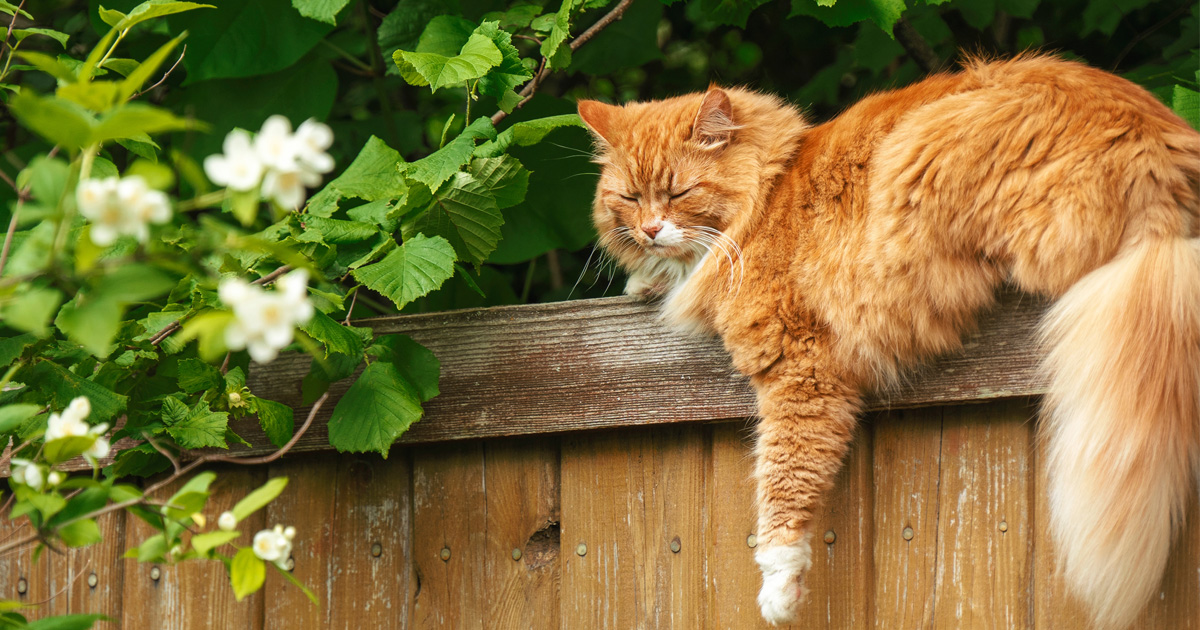
If you’re a cat owner in Werribee, you’ve probably heard the news by now. Wyndham Council has decided to extend the existing cat curfew from the usual 10pm to 6am slot to a full 24-hour containment requirement. This means that from December 2026, your moggie will need to stay within your property boundaries at all times, just like dogs have been required to for years.
I’ve had a few friends reach out asking what this actually means for them and their cats, so I figured I’d write something up that breaks down what’s happening, when it’s happening, and most importantly, what you can do about it.
Full disclosure: I’ve got two cats myself. Thomas is about a year old and Ed is around six. I’ve also got cat netting already set up from when I had Ronald, who sadly passed away in 2024. So I’m not just writing this from a theoretical perspective. I’m actually dealing with the same challenges as everyone else.
What’s Actually Changing?
Since the year 2000, Wyndham has had a cat curfew requiring cats to be kept indoors between 10pm and 6am. This was brought in to stop cats from hunting native wildlife at night, getting into fights with other cats, and generally annoying the neighbours.
The new rules, which are part of the Domestic Animal Management Plan 2026-2029, extend this to 24 hours a day. So instead of just keeping Fluffy inside overnight, you’ll need to make sure they’re contained within your property all day as well.
The good news is that “contained” doesn’t necessarily mean “locked in the house forever.” Your cat can still go outside, they just need to stay within your property boundaries. This could mean your backyard, a cat enclosure, or anywhere on your land as long as they can’t wander off into the street or your neighbour’s garden.
The Timeline You Need to Know
Wyndham Council isn’t just flipping a switch and fining everyone immediately. They’ve announced a staged rollout throughout 2026 to give cat owners time to prepare. Here’s how it breaks down:
January to March 2026 – Education campaign period. Council will be running information sessions and providing resources to help cat owners understand the changes and prepare their properties. No fines during this period for the extended hours, but the existing 10pm-6am curfew is still enforced.
April to August 2026 – Caution-only period. If rangers find your cat wandering during the day, you’ll get a warning but no infringement notice. This is your chance to get your containment sorted without copping a fine.
September to November 2026 – Final warnings. Rangers will be issuing final warnings and keeping records of repeat offenders during this period.
December 2026 onwards – Full enforcement begins. From December, fines will be issued for cats found wandering at any time of day under the Domestic Animals Act.
Throughout all of 2026, the existing 10pm-6am curfew remains in force, so you can still be fined for letting your cat out overnight.
What Are the Fines?
Currently, if your registered cat is caught wandering during curfew hours, the fine is $102. If your cat isn’t registered, you’re looking at $407 for failing to register them, which is a separate penalty under Council’s Local Law.
These are the current fine amounts, but Council reviews them each financial year, so by the time full enforcement kicks in December 2026, the amounts could have changed. Either way, it’s not cheap, especially if your cat is a repeat offender.
Why Is This Happening?
The decision to extend the cat curfew came after extensive community consultation. Over 1,000 residents participated in early engagement and 66 formal submissions were received during the public exhibition period. While most submissions supported stronger cat containment, the community is definitely divided on this one.
Council says the main reasons for the 24-hour containment are:
Wildlife protection – Cats are incredibly effective hunters and can have a significant impact on local native birds, reptiles and small mammals. Even well-fed pet cats will hunt for sport.
Cat safety – The RSPCA recommends keeping cats at home contained within your property as the best way to keep them safe from harm. They claim containment can increase a cat’s life expectancy by up to 10 years. Outdoor cats face risks from cars, fights with other cats, diseases, getting lost, and injuries from various sources.
Neighbourhood amenity – Cats can annoy neighbours by spraying, fighting, digging in gardens and sandpits, and making noise. This is particularly relevant in suburban areas like Werribee where houses are close together.
Not everyone is happy about it. One resident quoted in local news described the decision as “a joke,” saying Wyndham Council had “bigger fish to fry” and questioning how realistic it is to actually stop cats from leaving their properties. She pointed to other issues like accessibility problems, illegal parking, youth services and homelessness as bigger priorities.
I can see both sides. On one hand, the impact cats have on wildlife is well-documented and concerning. On the other hand, enforcing a 24-hour containment requirement is going to be challenging for many households, particularly those with cats that have been allowed to roam freely for years.
How to Adapt: Keeping Your Cat Happy at Home
If you’re sitting there thinking “my cat is going to lose their mind being stuck inside all day,” you’re not alone. But there are plenty of ways to keep your cat contained while still letting them enjoy the outdoors and maintain their quality of life.
Cat-Proof Your Yard
The most comprehensive solution is to cat-proof your existing yard so your cat can still go outside but can’t escape. There are several ways to do this:
Cat-proof fencing – This involves installing special fencing or modifying your existing fence to prevent cats from climbing over. Some systems use angled brackets at the top of the fence that cats can’t grip onto.
Roller systems – These are devices that attach to the top of your fence and roll when a cat tries to jump up, preventing them from getting over. They look a bit like pool noodles on a roller and they actually work pretty well.
Fence extenders – Adding height to your fence with netting or mesh that angles inward can stop cats from climbing out. Just make sure you check with council first as there are height restrictions on boundary fences.
The advantage of cat-proofing your yard is that your cat gets to maintain most of their outdoor lifestyle. They can still patrol their territory, lie in the sun, dig around in the garden, and do all the normal cat things. They just can’t leave your property.
The downside is cost and feasibility. If you rent, you’ll need permission from your landlord. If you have a large property, it can get expensive. And if your cat is particularly athletic or determined, some systems might not be enough.
Build a Catio or Cat Enclosure
A catio (cat patio) is basically an outdoor enclosure specifically designed for cats. These can range from small window boxes to elaborate multi-level structures that take up half your backyard.
The benefits of a catio include:
- Complete security – your cat definitely can’t escape
- Protection from weather – you can add roofing
- Customisation – you can build in climbing posts, shelves, hiding spots, and all sorts of enrichment
- No need to modify your existing fencing
There are plenty of DIY plans available online if you’re handy with tools, or you can buy pre-made kits. Some companies will even come and install a custom catio for you, though this obviously costs more.
The main disadvantage is that a catio provides less space than a whole yard. But if you make it interesting enough with vertical space, hiding spots, and things to do, cats can be very content in a well-designed enclosure.
Keep Them Inside
The simplest option is to just keep your cat inside full-time. This is what many cat owners in cities already do, and indoor cats can live perfectly happy lives.
The key to successful indoor cats is providing enough enrichment:
Vertical space – Cats love being up high. Cat trees, wall-mounted shelves, and furniture they’re allowed on all help.
Window access – Set up a perch where your cat can watch birds and what’s going on outside. Some people even put bird feeders near windows (but not too close) to give their cats something to watch.
Play time – Regular interactive play with toys mimicking prey (feather wands, laser pointers, toy mice) helps satisfy their hunting instinct.
Scratching posts – Cats need to scratch. Provide appropriate scratching posts or pads in locations your cat actually uses.
Multiple litter trays – The rule of thumb is one litter tray per cat, plus one extra. Keep them clean.
Routine – Cats are creatures of habit. A predictable daily routine helps keep them content.
Harness Training
Some cats can be trained to walk on a harness and leash, which means you can take them outside for supervised adventures. The Council has confirmed that cats on harnesses under effective control are fine.
This works better with some cats than others. Younger cats tend to adapt to harnesses more easily than older cats who’ve never worn one. It requires patience and lots of positive reinforcement, but it can be a great option for cats who really need that outdoor time.
Just be aware that harness walking a cat is different from walking a dog. Cats tend to meander, want to sniff everything, and will sometimes just plonk themselves down and refuse to move. It’s more about letting them explore at their own pace than getting exercise.
Combination Approaches
You don’t have to pick just one method. Many cat owners use a combination. For example, you might have a catio they can access through a cat door, plus regular indoor play sessions and occasional harness walks. Or a cat-proofed yard plus plenty of indoor enrichment for when the weather is rubbish.
What If You Rent?
This is going to be tricky for renters. Any modifications to fencing or installation of enclosures will require permission from your landlord. Some landlords might be willing to let you make modifications if you agree to remove them when you move out, or if the modifications add value to the property.
If your landlord won’t agree to modifications, your options are basically keeping the cat inside full-time or harness training. It’s worth having a conversation with your property manager early to see what’s possible.
What If Your Cat Is Already Indoor-Outdoor?
If your cat is used to roaming free, the transition to being contained is going to take some adjustment. Cats don’t love change, and an older cat who’s been going outside unsupervised for years might protest initially.
I’m dealing with this myself. I’ve always tried to keep Thomas and Ed inside, but my ex-partner started letting them out a lot when we were together, and now my housemate does too. Once cats get a taste of outdoor freedom, it’s hard to put that genie back in the bottle. Ed especially has gotten used to his outdoor adventures over the years.
The key is to make the transition gradual where possible. Start limiting outdoor time now, even before you have to. Get your containment solution in place early so your cat has time to adjust. Make sure your house or yard has plenty of enrichment so being contained doesn’t feel like a punishment.
Some cats adapt quickly. Others take weeks or months. There might be some yowling at doors, trying to escape, or acting sulky. This is normal and usually settles down once they realise the new routine is permanent.
If your cat is really struggling, it’s worth talking to your vet. They can check for any health issues and might recommend things like pheromone diffusers or, in extreme cases, temporary medication to help with the transition.
Getting Started Now
Even though full enforcement doesn’t start until December 2026, there’s no reason to wait. The earlier you start preparing, the easier the transition will be for both you and your cat.
I’m working on this myself right now. I’ve got an enclosed cat run down the side way that I originally built for Ronald, and I’ve just bought some cat doors to install in my laundry so Thomas and Ed can access it whenever they want. That way they can still go outside but they’ll be contained in a secure area.
I also need to get my back sliding door fixed. The rollers are broken, which makes it hard to open and close properly. This has made it way too easy for the cats to dart outside whenever someone goes out to hang the washing. I’m looking at potentially adding a flyscreen sliding door as well, which would give us an extra barrier and let us have the main door open for airflow without worrying about cat escapes.
These are the kinds of practical things you need to think about. It’s not just about building an enclosure or putting up cat netting (which I already have from Ronald’s time). It’s also about looking at all the ways your cats currently get out and closing those gaps.
Council is running education campaigns throughout the year and has resources available on their website about cat containment options. Take advantage of the grace period to figure out what will work best for your situation and get it set up.
Start with small changes. If your cat is currently free-roaming 24/7, maybe start by calling them in overnight consistently if you haven’t already. Then gradually reduce their unsupervised outdoor time. Get them used to spending more time inside or in an enclosure while you’re working on your long-term solution.
Other Cat Rules to Remember
While everyone’s focused on the 24-hour containment rules, it’s worth remembering the other legal requirements for cat owners in Wyndham:
Registration – All cats over three months old must be registered with Council. This is how lost cats get reunited with their owners.
Here’s an annoying situation I’m dealing with: my ex-partner registered both Thomas and Ed under her name for some reason, even though they’re my cats and she doesn’t live here anymore. So if we get any fines for them wandering, they’ll probably go to her address. Something to think about if you’re in a similar situation – make sure your cat’s registration details are up to date with the correct owner and address.
Microchipping – Cats must be microchipped before being released from the pound, and it’s a good idea anyway so your cat can be identified if they get out.
Desexing – While not legally required in all cases, desexed cats are cheaper to register and generally better behaved.
If your cat gets picked up by a ranger or trapped by a neighbour and taken to the pound, you’ll face a release fee on top of any fines. And if your cat isn’t registered or microchipped, you’ll need to sort that out before you can get them back.
What About Neighbouring Cats?
One consequence of stricter cat containment rules is that more people might be dealing with neighbouring cats on their property during the transition period. If a cat is wandering onto your property during the day (outside the current curfew hours), it can still be trapped if you object to it being there.
Council offers a cat trapping service. If you have issues with cats trespassing, they recommend talking to the cat’s owner first if you know who it is. If that doesn’t resolve it, you can request a trap from Council.
Cats can be annoying to non-cat-owners. They dig in gardens, spray on things, fight noisily, and can stress out indoor cats who see them through windows. The new rules should eventually reduce these issues as more cats become contained.
Final Thoughts
Look, I get that this is a big change for a lot of cat owners. Cats have been allowed to roam relatively freely in Australian suburbs for generations. But the reality is that attitudes toward cat ownership are changing, both because of wildlife concerns and changing ideas about pet welfare.
As someone who’s currently working through this with Thomas and Ed, I know it’s not always straightforward. Especially when other people in your household have different ideas about whether cats should be outside or not. But the rules are coming regardless of whether we think they’re perfect or not.
Werribee and the rest of Wyndham aren’t the first to implement 24-hour cat containment. Other areas like the Surf Coast already have similar rules. Geelong still has a sunset-to-sunrise curfew, but other councils are watching how 24-hour containment goes in places like Wyndham.
The 2026 timeline gives everyone a decent amount of time to prepare. Use it. Don’t wait until November and then panic when you realise enforcement is about to start. Get your plan sorted now, make the changes gradually, and both you and your cat will be better off for it.
And honestly, once you get past the initial adjustment, most cat owners find that contained cats are actually easier to manage. You don’t have to worry about them getting hit by cars, coming home with injuries from fights, or upsetting the neighbours. You know where they are. They’re safer, they generally live longer, and the local wildlife gets a break.
Is it going to be perfect? Probably not. Will some cats really struggle with the transition? Almost certainly. But with the right preparation and setup, most cats can adapt to being contained and still live full, happy lives.
If you want more detailed information about the rollout timeline, fines, or containment options, check out the Wyndham City Council website. They’ve got resources, fact sheets, and contacts for the Animal Management Team who can answer specific questions about your situation.
Good luck with the transition. Your cat might not thank you initially, but the local native birds definitely will.

