

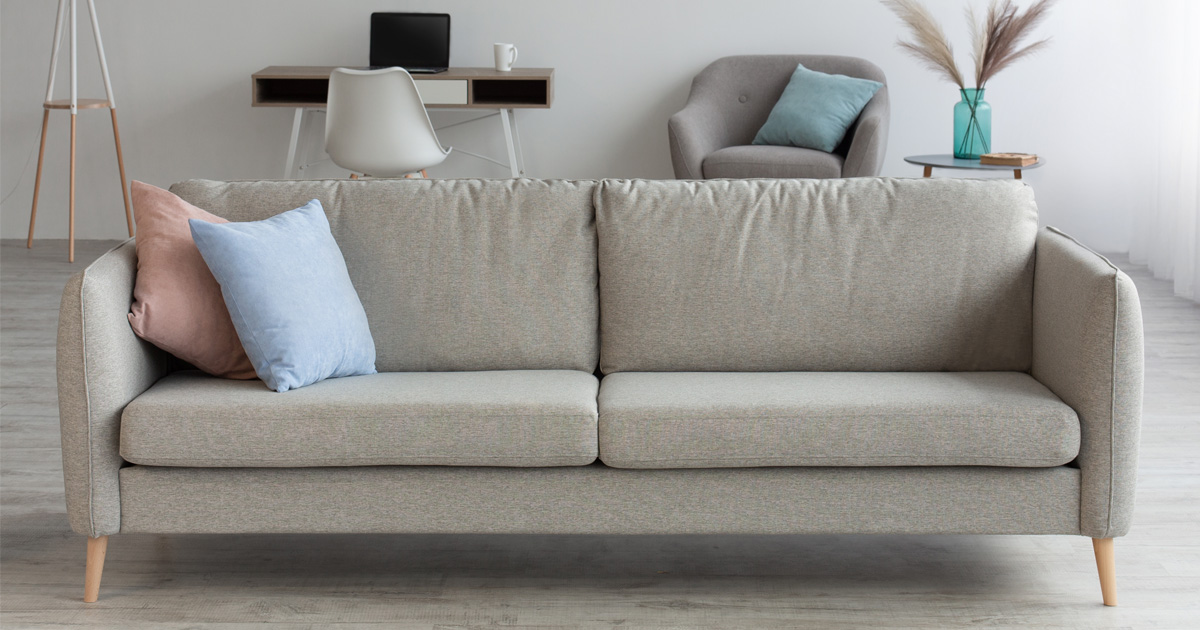
Okay. I’m about to talk about sofas. This might not be the most exciting thing you’ll read today, but if you’re in the market for one, you’ll want to read this before you end up with something that looks great in the showroom but makes you hate your life after three months.
I’ve been through this process more times than I’d like to admit. I’ve owned couches that looked incredible but felt like sitting on a park bench, and I’ve had sofas that were comfortable but looked like they belonged in a retirement village. Right now I’ve got an IKEA Friheten corner sofa bed which isn’t super comfortable but was affordable and practical when we needed it, plus another grey couch that I got for free. It doesn’t quite match but it’ll do for now. Here’s what I’ve learned about choosing the right sofa for your living room without losing your mind or your wallet.
Work Out Your Budget First
You need to know what you’re willing to spend before you even start looking. Otherwise, you’ll fall in love with a $5,000 Italian leather sectional when you’ve only got $800 to spend, and that’s just depressing.
Sofas can range from a few hundred dollars for something basic from Kmart all the way up to tens of thousands for designer pieces. My advice is to work out what you can actually afford without putting it on a credit card you can’t pay off. You’re going to be living with this thing for years, so it’s worth spending a bit more if you can, but don’t go broke buying furniture.
For most people, you’re looking at somewhere between $1,000 and $3,000 for a decent quality sofa that will last. If that sounds like a lot, remember you’re probably going to use this thing every single day for the next 5 to 10 years. That works out to less than a dollar a day.
Measure Your Space (Seriously, Do This)
I know this seems obvious, but you’d be surprised how many people just eyeball it and then get their new sofa home only to discover it doesn’t fit through the doorway or completely dominates the room.
Get a tape measure and write down these numbers:
The width, depth and height of the space where you want to put the sofa. The width of your doorways, hallways and any staircases the sofa needs to get through. The height of your ceilings, as a huge sectional can make a room with low ceilings feel cramped.
Also, think about traffic flow. You don’t want to buy a massive corner lounge only to discover that everyone has to squeeze past it to get to the kitchen. Leave at least 45cm of walking space around your furniture.
Think About How You Actually Use Your Lounge Room
This is where a lot of people get it wrong. They buy what looks good in a catalogue without thinking about their real life.
Do you have kids who are going to jump all over it? You’ll want something durable with removable, washable covers. Do you like to lie down and watch TV? A deeper sofa or one with a chaise might be better than a standard three-seater. Do you host a lot of people? You might need a sectional or multiple pieces that can accommodate everyone. Are you the kind of person who eats dinner on the couch? Maybe avoid light coloured fabrics unless you enjoy living in constant fear of tomato sauce. Do you have guests stay over regularly? A sofa bed might be worth considering, but keep in mind they’re usually less comfortable as an everyday sofa and the pull-out mechanism can be a pain to use. Do you have pets? This is a big one that deserves its own section.
I have two young kids and two cats, so when we were sofa shopping, anything white or cream was immediately out of the question. We needed something that could survive sticky hands, spilled drinks, cat hair and the occasional sultana that goes missing for three weeks under the cushions.
If You Have Pets, Read This Bit Carefully
Pets and sofas have a complicated relationship. If you’ve got dogs or cats, you need to factor this into your decision or you’ll regret it within weeks.
For cats: They scratch. It’s just what they do. If your cat uses furniture as a scratching post, leather and faux leather are basically asking for trouble. They’ll get shredded. Tightly woven fabrics like microfibre or performance fabrics work better because cats can’t get their claws into them as easily. Avoid loose weaves or anything with a nubby texture. Also, cat hair shows up on everything, but it’s particularly visible on dark colours. If you don’t want to spend your life with a lint roller in hand, choose a fabric colour that’s close to your cat’s fur colour.
For dogs: If your dog is allowed on the furniture (no judgment either way), you need to think about muddy paws, shedding and the occasional accident from puppies. Leather can handle being wiped down easily, which is handy for muddy days. Performance fabrics with stain protection are your friend here. If your dog has long nails, they can scratch leather, so you might want to go with a darker colour that hides minor scratches. Some people get a dedicated dog blanket to put on the sofa, which is a smart move but only works if your dog actually stays on the blanket.
Material considerations for pet owners: Performance fabrics like Crypton or similar are designed to resist stains, odours and moisture. They’re more expensive but worth it if you have pets. Microfibre is surprisingly pet-friendly because pet hair doesn’t stick to it as much and it’s easy to clean. Avoid velvet or suede, they’re magnets for pet hair and show every mark. Darker colours and patterns hide fur and dirt better than light solid colours.
The reality is that if you have pets, your sofa will probably show some wear faster than if you didn’t. That’s the trade-off for having animals. Just choose something that makes the damage less visible and easier to clean up.
Choose the Right Size and Configuration
Sofas come in all sorts of sizes and shapes. The main types you’ll see are:
Two-seater sofas are good for smaller spaces or as additional seating alongside a larger sofa. They’re also easier to move house with, which is handy if you’re renting.
Three-seater sofas are probably the most common choice. They fit most living rooms and provide enough seating for a small family or a few guests. This is your standard, bread-and-butter sofa.
Sectional sofas or corner lounges can seat more people and define a space in an open-plan home. They’re great if you have the room but can be an absolute nightmare to move. I helped a mate move house once and his corner lounge barely fit through any doorway. We had to take it apart and even then it was touch and go.
Sofa beds are handy if you have guests stay over regularly. The pull-out ones with a mattress inside are more comfortable for overnight guests than futons. Just be aware that sofa beds are usually heavier, the mechanism can be annoying to use, and they’re not always as comfortable as a regular sofa because of the way they’re constructed. My IKEA Friheten is a sofa bed and whilst it was great value and has storage underneath, the comfort isn’t amazing for everyday sitting. If you’re going to use it as a bed more than once a month, make sure you test how easy it is to pull out and fold back up.
Chaise lounges have an extended seat on one end, perfect if you like to stretch out. Just make sure you get the chaise on the right side for your room layout. Most places let you choose whether the chaise is on the left or right when you order.
Think about whether you want your sofa against a wall or floating in the middle of the room. If it’s going to be seen from all angles, make sure the back looks decent too.
Fabric vs Leather
This is one of those debates that people get weirdly passionate about, like pineapple on pizza or whether you should put milk in the bowl before the cereal.
Fabric sofas come in endless colours and patterns. They’re usually cheaper than leather and can be more comfortable in hot weather because they don’t stick to your skin when you’re sweating through summer. The downside is that they can stain more easily and collect pet hair if you have animals. Look for fabrics with a high rub count, anything above 25,000 is good for heavy use. Consider performance fabrics that resist stains if you can afford them.
Leather sofas look great and are easy to wipe clean, which is why they’re popular in homes with kids. They also tend to last longer than fabric if you look after them. The cons are that they can be hot and sticky in summer, cold in winter, and they scratch easily if you have pets with claws. Real leather is expensive but wears beautifully over time and develops a nice patina. Faux leather is cheaper but can peel and crack after a few years, especially in cheaper sofas.
There’s also microfibre, which is sort of a middle ground. It’s soft like fabric but easier to clean. Some of the modern performance fabrics are actually pretty impressive at resisting stains. They cost more upfront but might save you money in the long run if you’re constantly cleaning your sofa.
Test the Comfort
Never, and I mean never, buy a sofa without sitting on it first. I don’t care how good the photos look online or how many five-star reviews it has.
When you test a sofa in the store, do these things:
Sit down normally and see if it feels comfortable. Can your feet touch the floor? Is the depth right for your legs? If your legs are too short and your feet dangle, you’ll get sore. If the seat is too shallow, you’ll feel like you’re perched on the edge. Lean back and see if the backrest supports you properly. Does it feel too upright or too reclined? Lie down if that’s how you plan to use it. Is it long enough? Is it too firm or too soft for lying on for a few hours? Sit for at least five minutes. Sometimes a sofa feels great at first but gets uncomfortable quickly. This is especially true with really firm sofas. Check the armrests. Are they at a comfortable height? Are they too hard or too soft? Can you lean on them without your arm going numb? Bounce around a bit, yes really. The frame shouldn’t creak or feel wobbly. If it does, walk away.
What’s comfortable for one person might be torture for another. My partner likes a firm sofa, but I prefer something a bit softer. We compromised with medium firmness and I just use extra cushions when I want to lie down.
I didn’t test the Friheten properly before buying it and that’s probably why the comfort isn’t great. I was more focused on the practicality of the storage and sofa bed function. Learn from my mistakes.
Consider the Frame and Construction
You can’t always see the frame, but it’s what holds everything together. A good quality sofa will have a hardwood or kiln-dried hardwood frame. Avoid sofas with frames made from particle board or plastic, as they won’t last more than a few years.
The cushions should be high-density foam, down feathers or a combination of both. Cheaper sofas often use low-density foam that compresses quickly and never bounces back. You’ll end up with a sagging sofa within a year or two. Spring systems matter too. Eight-way hand-tied springs are the gold standard, but sinuous springs or S-springs are also decent and more common in mid-range sofas.
Ask the salesperson about the construction. If they can’t tell you details about the frame or cushions, or if they get vague about it, that’s a red flag. A good quality sofa should come with information about what it’s made from.
Think About Maintenance
Some sofas need more looking after than others. Leather needs conditioning every now and then to stop it drying out and cracking. Light coloured fabrics show every mark. Velvet can crush and look worn in high-traffic spots.
Check if the cushion covers are removable and washable. This is a massive bonus if you have kids or pets, trust me on this. Being able to chuck the covers in the washing machine when someone spills something is a game changer. Look at how easy it is to vacuum under and around the sofa. Some modern designs sit really low to the ground, which looks sleek but makes cleaning underneath basically impossible. You’ll end up with a collection of lost toys, food and dust bunnies under there.
If you’re not the kind of person who wants to spend time maintaining furniture, choose something low-maintenance. Dark colours, durable fabrics and simple designs are your friends. I’m definitely in this category. I want a sofa that looks good without me having to fuss over it constantly.
Match Your Style (But Don’t Overthink It)
Your sofa should fit in with the rest of your home, but it doesn’t have to match perfectly. In fact, trying to match everything exactly can make a room look a bit boring and showroom-like.
Think about the overall vibe you’re going for. Modern and minimalist? Look at clean lines and neutral colours. Cosy and traditional? Maybe a plush fabric sofa with rolled arms. Scandinavian style? Light wood legs and simple shapes in neutral tones. Industrial look? Leather with metal or dark wood accents.
Neutral colours like grey, navy, charcoal or beige are safe choices that work with most styles and are easier to decorate around. You can always add colour with cushions and throws. If you want to go bold with colour, make sure it’s something you’re not going to get sick of in six months. That bright yellow sofa might look amazing in the store, but will you still love it in two years?
Both of my current sofas are grey, which wasn’t intentional but it means they don’t clash too badly even though they don’t match. Sometimes things just work out.
Don’t Forget the Delivery
Before you buy, find out about delivery. This stuff matters more than you’d think.
Will it come flat-packed and you have to assemble it? I’ve done this with cheaper sofas and it’s not fun. You’ll need tools, patience and probably another person to help. The Friheten came flat-packed from IKEA and assembly took a few hours. Will they deliver it to your door or all the way into your living room? Some companies charge extra to bring it inside. Do they take away your old sofa? This is really handy if you need to get rid of one. Is there an extra charge for delivery or assembly? Factor this into your budget.
Make sure the delivery team can actually get the sofa into your house. Check those doorway and staircase measurements again. Some companies offer a template or detailed measurements you can use to check if it will fit. Don’t just assume it will be fine. I’ve heard horror stories about people having to return sofas because they couldn’t get them through the front door.
Where to Buy Your Sofa
You’ve got a few options here, each with pros and cons:
Furniture stores like Harvey Norman, Fantastic Furniture or Nick Scali have decent selections and you can see and test everything in person. This is the big advantage. They often have sales, especially around public holidays like Boxing Day or Easter. The salespeople can be a bit pushy sometimes, but they can also answer questions about the construction and warranty.
IKEA is worth mentioning separately because they’re probably the most popular option for budget-conscious people. The Friheten has been solid for us despite not being the most comfortable. IKEA sofas are affordable, come in lots of configurations and you can replace the covers if they get damaged. Just know that you’ll be assembling it yourself.
Online retailers like Temple & Webster, Koala or even Kmart (for budget options) usually offer cheaper prices and convenient home delivery. The risk is you can’t try before you buy, but most have good return policies these days. Read the reviews carefully before ordering online. Look for reviews with photos so you can see what it actually looks like in someone’s home.
Second-hand options from Facebook Marketplace, Gumtree or op shops can save you heaps of money if you don’t mind something pre-loved. Op shops like Salvos or Vinnies often have both contemporary sofas and old-fashioned ones with character, though you’ll need to check them regularly as the good stuff gets snapped up quickly. I got my second grey couch for free this way. Just check carefully for damage, stains and smells. Ask why they’re selling it if you’re buying from an individual. If you’re buying from a smoker’s home or a house with pets, the sofa might smell even if it looks clean. Take a mate with you to help carry it if you’re picking it up yourself.
Custom makers are great if you have an awkward space or specific requirements that off-the-shelf sofas won’t meet. They cost more and take longer, sometimes months, but you’ll get exactly what you want.
I usually start by looking online to get ideas and compare prices, then go to physical stores to test out similar styles before making a decision. It’s the best of both worlds.
Final Thoughts
Choosing a sofa doesn’t have to be complicated, but it does require a bit of thought. Take your time, do your measurements, test out different options and buy the best quality you can afford. Don’t rush into it just because there’s a sale ending soon. There’s always another sale.
The perfect sofa is one that fits your space, suits your lifestyle, matches your budget and feels comfortable after a long day. It doesn’t matter if it’s the most expensive leather sectional or a budget-friendly fabric three-seater from Kmart, as long as it works for you and your family.
Also remember that no sofa is going to last forever, especially if you’ve got kids bouncing on it or pets sleeping on it every day. That’s just life. Buy something you can afford to replace in 5 to 10 years if you need to.
Now go forth and find your perfect sofa. Your living room, your back and your wallet will thank you.

