

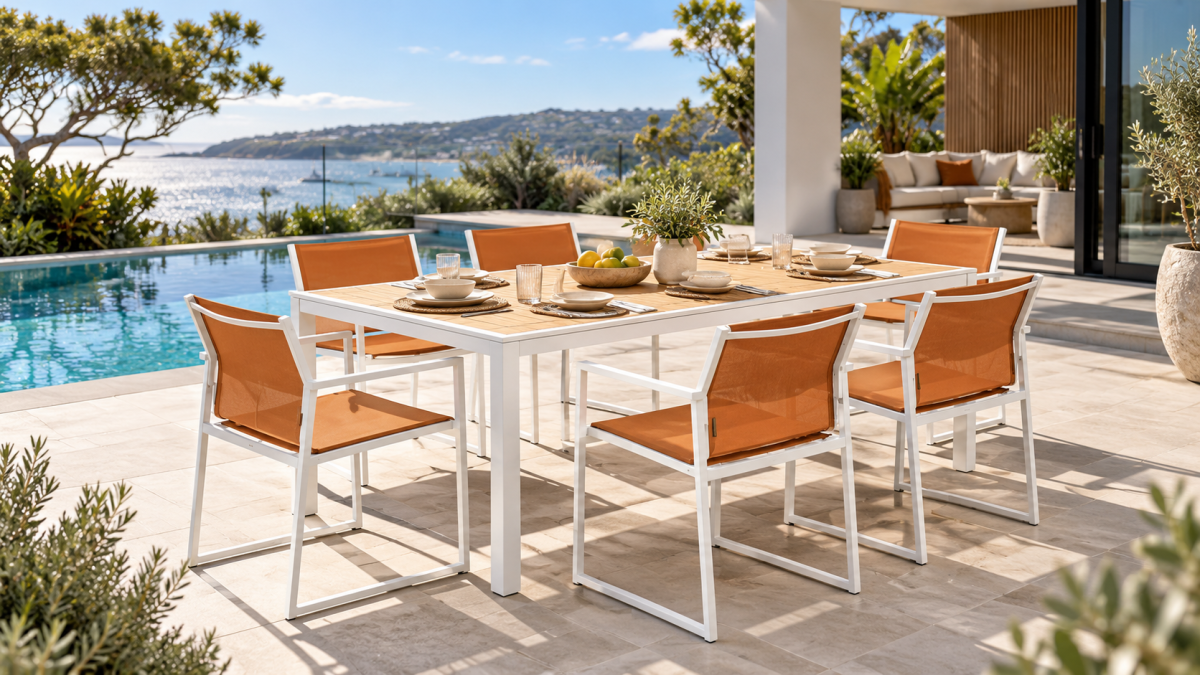
I’m fairly sure most of us have bought an outdoor setting that looked great in the shop and a bit sad by the second summer. The cushions fade to a sort of tired pastel. Rust shows up at the joins. One chair gets a wobble, and nobody admits to it. Most people shrug and put it down to outdoor furniture being outdoor furniture.
It doesn’t have to be. Cafés and pubs deal with the same weather, only with a lot more people sitting on the stuff, and no publican is keen on replacing a whole terrace every couple of years. So they buy differently. I think that’s worth understanding even if all you want is somewhere decent to eat on a Sunday.
What the sun does to a budget setting
Our sun is brutal on outdoor furniture. Cheap fabric and thin finishes bleach out, the coating chips along the edges, water finds its way in, and a steel frame can be rusting away on the inside while the outside still looks fine. Screws and bolts usually go first. A fastener that cost a few cents rusts, and you end up with a brown stain running down the frame.
Budget sets aren’t a scam. They’re priced for a home that uses them on weekends, and plenty hold up well under cover. The trouble starts when they cop full sun, get dragged across the pavers and sit out all winter, which is how most backyards actually work. By then the cheap dining set isn’t much of a bargain. It’s more of a subscription, and you pay it every few years.
What commercial actually means
Good commercial outdoor furniture is built on the assumption that people will sit on it constantly and treat it badly. I’m no engineer, but from what I can tell that means heavier frames, tougher finishes and UV-rated fabric, plus joins you can tighten or replace instead of just putting up with them.
“Commercial grade” is also a marketing phrase, so I’d treat it with the same suspicion as any other label. In Australia the more useful signal is an independent rating, such as the commercial ratings from AFRDI, which grade furniture by how hard it is expected to work, from light use up to severe. A supplier who can tell you the rating of a chair has done some homework. One who just says “heavy duty” has not.
Why the dining setting is where it matters
If I could only spend big on one part of the backyard, it’d be the table and chairs. Nothing else out there gets punished like they do. Chairs get scraped back, tipped onto two legs and occasionally stood on by someone who should know better. The tabletop sits in full sun and takes whatever lands on it: spills, sunscreen, a hot dish nobody put a trivet under.
That’s the sort of abuse commercial outdoor dining furniture is made for. A restaurant terrace puts the same setting through a Friday night rush and then does it all again on Saturday. I’d guess a set that survives that won’t notice a family of five on a long weekend.
What you give up
The obvious catch is price. Commercial pieces cost more upfront, and the argument that they are cheaper per year only works if you actually keep them for years. They are also heavier, which is good in a southerly and less good when you want to rearrange the courtyard for a party.
Style is the other trade-off. A lot of commercial ranges have that clean, modern hospitality look, so if you’re after rustic or properly traditional, you’ll have fewer to choose from. Many suppliers also sell to the trade first. So ask whether they’ll sell to the public at all, and whether the warranty still counts once the furniture is in someone’s backyard instead of a venue.
Commercial Outdoor Furniture for a Home Backyard
If your setting lives under a solid roof, or you’re probably moving in a couple of years, a budget set makes plenty of sense. If it sits in the open and you want to buy once, commercial is worth a serious look. How hard the weather hits it depends a lot on whether you’ve got a covered or open alfresco, so I’d start there.
Before you buy anything, ask four questions. What’s the frame made of, and how is it finished? Is the fabric UV rated, and can you replace the cushions separately? Can you get spare parts in five years? And does the warranty cover home use? A supplier who answers all four without a sales pitch is usually one worth buying from.

