

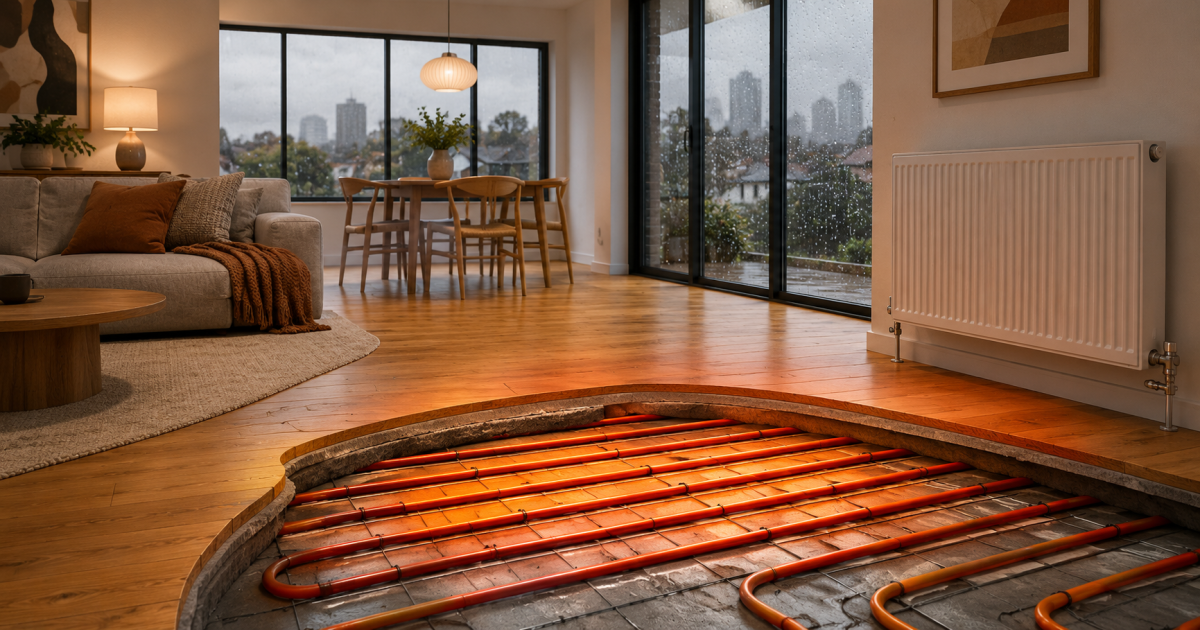
I decided to research this topic because of my experience living in Melbourne. The floorboards in my house become very cold during the winter. Although our home is generally comfortable, it was constructed before insulation was a standard requirement. The heating system runs constantly every year, but a significant amount of the heat escapes through the ceiling. My family still wears beanies at the breakfast table to stay warm. During my research, I found that there is a solid concrete slab beneath our floorboards. This specific detail is more important for underfloor heating than I initially realized.
I began researching hydronic heating systems this year. I have not owned or operated this equipment for many years. I spent a significant amount of time reading technical information, consulting with professionals, and interviewing homeowners who use these systems. I have written this summary of the benefits and drawbacks I identified to save others from performing the same research.
So What Actually Is Hydronic Heating?
Hydronic heating systems use hot water instead of forced air to provide warmth. A boiler heats the water and circulates it through pipes to wall radiators, floor-level trench convectors, or coils installed within a floor slab. The heat moves from these surfaces into the room to warm the air and the people inside. After the water cools by releasing its heat, it flows back to the boiler to be heated again. According to the Australian Government’s energy.gov.au guide to heating and cooling, these radiant systems have high purchase and installation costs. They operate without noise and do not spread dust particles throughout the house.
This boiler has historically used gas. Many people are now choosing electric heat-pump boilers because of current energy prices and the wider move toward electrification that state and local governments across Australia are promoting. Both systems operate on the same principle. The technology is similar to the cast-iron radiators found in older houses, but it uses more modern equipment. I was surprised to learn how old some of these systems are. Hydronic setups are still in use in Melbourne homes that are 40 years old. This is different from most of the ducted units I have owned, which do not have the same lifespan.
Why It Suits Melbourne Homes in Particular
Melbourne winters have a specific type of cold. The weather is not snowy, but it remains damp and grey from May until September. This moisture makes the air feel cold and causes houses to feel damp. Many older weatherboard homes were not built for energy efficiency. Because of this, residents must heat rooms frequently without achieving a comfortable temperature. I prefer hydronic heating because it provides consistent background warmth. It does not use fans to blow hot air that turns off when a sensor reaches a certain point. The system keeps the entire room and the walls at a stable temperature. I also found a health benefit that I had not considered before. Hydronic heating does not move air, which means it does not spread dust, pet hair, or allergens. This is useful for households with pets or for people who have respiratory problems during the winter.
The Good Bits
I reviewed the material and found these specific features convincing:
This system provides comfort that forced-air systems do not achieve. The radiant warmth remains consistent from the floor to the ceiling. It avoids cycles of hot and cold temperatures and does not dry out the air. Owners frequently report high satisfaction with these features. I doubted these claims at first, but I have found them to be true.
The system is silent. It does not have fans or make clicking sounds. It operates in the background without noise, which benefits users who prefer a quiet home environment.
The system does not create drafts or blow dust. It is helpful for residents who have allergies or asthma, and it keeps the home from feeling stuffy during the winter.
The system operates efficiently after the initial startup. It warms the thermal mass rather than heating air that quickly escapes. A correctly configured system holds its heat and activates less often than a ducted unit, which loses warmth to the surrounding environment. This efficiency explains why concrete floors are an effective pairing, a topic I will discuss later.
These systems are durable. They have fewer moving parts than most heating methods, which leads to fewer mechanical failures. They are known to last for a long time.
The Not-So-Good Bits
I will provide a neutral assessment. Hydronic heating has specific drawbacks and does not meet the needs of every user.
The initial cost is substantial. This project is not low-cost. A complete system for a house will probably cost five figures, between $10,000 and $25,000 or more. This cost range depends on your home’s size, the number of panels needed, whether you have a gas or heat-pump system, and the complexity of pipework installation. This is only an estimate; a precise quote for your property is the only reliable cost. You should also check what government assistance you are eligible for. The Victorian Government’s Victorian Energy Upgrades program offers discounts on efficient electric appliances like heat-pump upgrades, which can reduce the cost of switching from gas.
The system responds slowly. The thermal mass that holds heat causes the system to take a long time to warm up from a cold state or to cool down. This is not a “walk in and blast the room in five minutes” solution. Most users operate the system on a timer or maintain a consistent temperature. If you need heat immediately on demand, you will need to adjust your expectations.
Retrofitting is a disruptive process. Installing a system into an existing home, especially underfloor, is more difficult than installing it during a new build or a renovation. This leads to the most useful information I gathered.
The Floor Beneath You Matters (The Timing Thing Nobody Told Me)
The most effective time to install hydronic heating is during a new build or a renovation. This applies particularly to underfloor systems. Because the floors and walls are already open, workers can install the pipework more easily. This approach is less expensive than modifying a finished house at a later date.
Your current flooring type determines the installation method. In new buildings, installers place the pipe loops directly into the concrete slab before pouring. This is the most efficient and least expensive approach. You cannot do this in an existing home, but a solid slab is still beneficial. Concrete provides the thermal mass necessary for underfloor heating because it absorbs warmth and releases it at a steady rate. If your existing slab is covered by floorboards, the standard retrofit method is a low-profile overlay system. These are thin panels that hold the pipe loops and sit on top of the old floor before you install the new floor covering.
The primary consideration for an overlay system is height. These systems increase the floor level by approximately 20 to 30 millimetres. This change affects door clearances, transitions to adjacent rooms, and skirting boards. Because of these factors, it is simpler to perform this installation during a larger renovation rather than as a standalone project.
I should have considered these factors before we renovated our bathroom. I would have paid for the option to have warm tiles during the winter, particularly because we had already removed the floor and the slab was exposed. I missed that opportunity; you should avoid this error. If you think you might want underfloor heating in the future, you should plan for it before you install the new floor.
Getting the Right Advice (This Bit Matters)
I have reviewed several quotes and researched this topic thoroughly. I recommend that you do not accept the first estimate you get and that you do not attempt to finish this project on your own.
Hydronic systems need to be designed correctly for your home. An expert must determine the number and size of the panels, where they are placed, how the system is zoned, the boiler type, and if your floor requires an in-slab or overlay approach. If these factors are not addressed, the system may be expensive to run and fail to heat the space evenly. I consulted a Melbourne company that specializes in these systems. Talking to a professional hydronic heating specialist in Melbourne was more useful than looking at forum posts. They explained the specific needs of my house and said that a service or repair is often better than replacing the entire system. They did not push the most expensive products. Their emphasis on repairs made me trust their services more.
Ask the provider if they service all brands, what the warranty covers, and how frequently the system needs maintenance. Standard practice involves an annual service to maintain efficiency and a power flush every few years to stop debris from building up in the pipes. You should include these recurring costs in your budget instead of only considering the installation price.
So, Is It Worth It?
The best choice for your home depends on your specific circumstances. If you live in an older house in Melbourne that is hard to heat, you might find the dry air from ducted systems uncomfortable. Hydronic heating is a functional choice if a resident has allergies and you plan to live in the property for a long time. This system provides more comfort than other heating methods. While the initial price is high, the investment is more practical when you calculate the expense over many years of operation.
This option is likely unsuitable for people who rent their homes, plan to move soon, or require an immediate low-cost heating solution.
The concrete slab under our floorboards has caused us to consider this option seriously for our next home. We plan to design the floor and the heating system together from the start. This approach is the most affordable and efficient method, as it avoids the difficulties of modifying a finished house. Until we start that project, I will wear warm clothes, drink tea, and remain unhappy with the temperature of my floor; stay warm. The winter in Melbourne is hard, but you can stay comfortable with the right equipment.

